
How Do I Write a Song?
There are several starting points for writing your first song. Some people start with lyrics, others begin with a musical idea, a chord progression or simply a mood they want to capture. The best approach is the one that gets you creating.
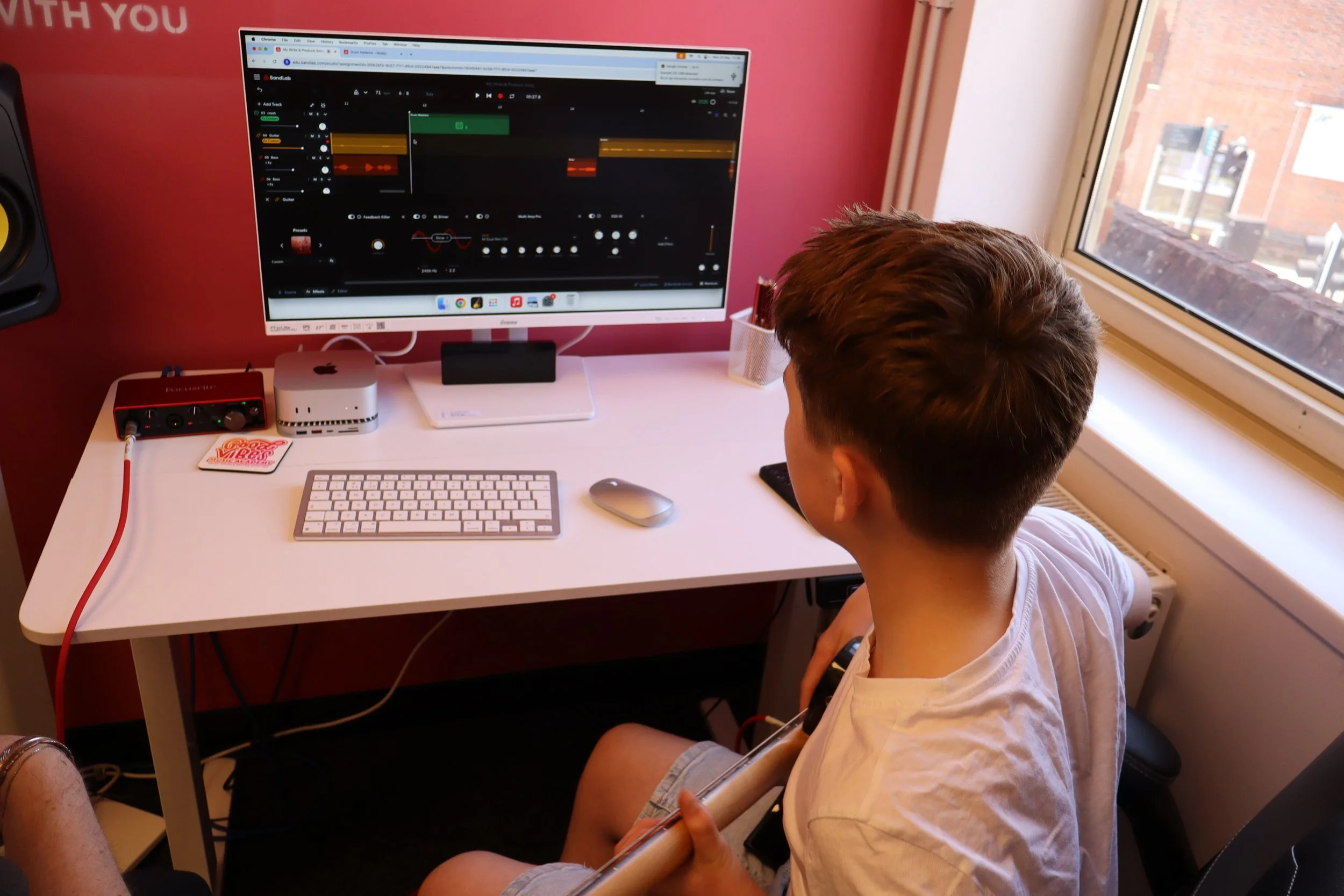
Student writing a song using a DAW at Good Vibes Music Academy.
The good news is that songwriting isn't something reserved for professional musicians. Like learning guitar, drums, vocals or music production, songwriting is a skill that can be learned, developed and enjoyed by anyone.
If you've always wanted to write your own music but aren't sure where to start, here are some simple techniques that can help.
Start With Lyrics
For many songwriters, the words come first.
One of the easiest ways to get started is using a technique called stream of consciousness writing.
Set a timer for five minutes and write continuously without stopping to edit, judge or correct yourself. Don't worry about whether it rhymes or even makes complete sense.
The goal is simply to get ideas onto the page.
You will often find interesting phrases, themes or emotions appearing naturally that can become the basis of a song.
Remember, great songwriting often starts with honest ideas rather than perfect lyrics.
Start With Chords
Another popular approach is to begin with a chord progression.
In fact, many songwriters start by borrowing a sequence of chords from a song they already know and enjoy. This isn't about copying. It's about using a familiar structure as a starting point.
Try playing a simple progression such as:
G - D - Em - C
C - G - Am - F
D - A - Bm - G
Once you have a progression you like, experiment with different rhythms, tempos and melodies until it begins to feel like your own.
Many hit songs use surprisingly simple chord sequences.
Start With a Mood
Some songs begin with a feeling.
Ask yourself:
Do I want this song to feel happy?
Energetic?
Reflective?
Powerful?
Emotional?
Once you know the mood you're aiming for, start experimenting with chords that match that feeling.
Major chords often sound brighter and more uplifting. Minor chords often create a more reflective or emotional atmosphere.
This approach is particularly useful for students interested in songwriting and music production because it focuses on creating a feeling first and building the song around it.
Start With a Title
A great title can unlock an entire song.
Think about phrases that grab your attention:
One More Chance
Running Out of Time
Home Again
The Last Summer
Once you have a title, ask yourself questions about it.
Who is the song about?
What happened?
Why is it important?
The answers often become your verses, chorus and story.
Don't Wait for Inspiration
One of the biggest misconceptions about songwriting is that you need inspiration before you start.
Most experienced songwriters will tell you the opposite.
The act of writing creates inspiration.
The more songs you write, the easier it becomes to generate ideas and develop them into finished pieces of music.
Not every song needs to be a masterpiece. Every song is an opportunity to learn something new.
Songwriting Is a Skill
Just like learning an instrument, songwriting improves with practice.
The best songwriters develop by:
Listening to lots of music
Learning songs by other artists
Understanding chord progressions
Experimenting with lyrics and melodies
Collaborating with other musicians
That's one of the reasons we place such a strong emphasis on creativity at Good Vibes.
Through our lessons, Star Levels, band opportunities and music production courses, students are encouraged to explore their own musical ideas alongside learning their instrument.
Learn Songwriting at Good Vibes
Our recent Write & Produce course gave students the opportunity to explore songwriting, music production and recording in a fun and supportive environment.
Combined with our band courses, Trinity Rock & Pop pathway and modern approach to music education, students have plenty of opportunities to develop as creative musicians.
Because learning music isn't just about playing songs.
Sometimes the most exciting thing you can play is one you've written yourself.